News

Oral History

From the time my dad was a kid, he loved playing video games.  I’ve heard about the stories when we talked on car rides and now on the phone for hours since I’m away at college.  When I was little, he was the first person to introduce me to games on the PlayStation that we owned.  We would play Ratchet and Clank together since my mom disproved of the blood and gore of most video games so my dad compromised with characters that exploded into bits and pieces of gears.  I chose my dad as my interview subject because of all the memories with him in the car talking about different stories from his childhood and I knew he loved video games as a child.  It was interesting to see how things changed from his perspective as the times and technology developed.  I was influence by the main character of Ready Player One in my choice of a topic for the oral history.  I wanted to focus on video games and thought it would be interesting to hear my dad’s perspective on them as he played the most when he was a kid around Wade’s age and grew up in the 80s, which is the the time period that the novel talks about frequently.  From the StoryCorps project, I was able to see examples of how oral histories were recorded and organized.  This helped shape how I edited my own recordings and helped me shorten down the audio to the most important elements. With this oral history, I hoped to imitate one of our many phone calls and recorded twenty minutes of audio of my dad’s stories on the evolution of video games from the first gaming system he owned and his adventures in the arcades to the Game Boy he got for Christmas.  I came into the interview with a list of questions, but my dad answered most of them before I could even ask them.  In result of this, I decided to cut out my voice since I only asked two questions during the whole conversation.  I believe that the recording resembles the way I listen to him talk about his childhood when we’re together.  The struggle was cutting out enough audio to get from twenty minutes to at least a minimum of five, while maintaining the important elements of the stories.  When starting the process of editing, I had to search some YouTube videos on how to use the program and found out how to cut out certain audio since I’ve never used Adobe Audition before.  I decided to add the sounds that video games from the arcades in the 80s would make to start off and end my recording.  I thought this added element introduced the topic and created an emotional and nostalgic connection with the audience.  Here are the links to the creative commons sound effects and image I used:

https://freesound.org/people/AdamWeeden/sounds/157218/

-https://soundcloud.com/brand-name-audio

https://commons.wikimedia.org/wiki/File:Ms._Pac-Man_%26_Donkey_Kong_-_arcade_cabinets.jpg
 

Project 4 Critique

The oral history, recorded and edited by Jerry Martinez, was an interview on technology and how it affects his life and how he thinks it will shape his children’s lives.  The recording is a total of about seven minutes long, which needs to be shortened to at least five minutes.  He could cut out some of the pauses between questions and answers or when the speaker repeats the questions or stops to think.  In the beginning, when introducing the subject, it’s a little rough in the speaking and could be edited by taking out certain words in a sound editor program.  However, it does introduce the person properly and sets up the rest of the interview.  The ending of the recording could be revised as well to transition to the end better.  The children in the background adds a special touch to the clip as it relates to the questions and the subject’s life.  Although I think the children’s voice should kept in the recording, the sound level could be lowered and the speaker’s voice could be a little louder to emphasis what he’s saying.  Other sound effects could be added to make the recording even more interesting, but it might not be necessary.


Project 3 Critique

The website was easy to navigate with the header bar and followed a specific theme throughout the site.  I enjoyed the way the portfolio pieces were large enough to really look at and easy to locate.  The color combination of blues and beige created a nice and calm theme that didn’t distract from the portfolio work being displayed.  I was impressed with the coding that changed the colors as it was a something I had difficulty finding on the CSS stylesheet.  I thought the header image was appealing to the eye, however, could have been a picture that showed more about who the creator of the web portfolio is as a person.  The only thing I thought the website lacked was an insight into the creator.  I wished their was more personal photos to be able to create a connection with them.  Whether the images be of them or more portfolio pictures, I think it would add to the website in a way that allowed the audience to better understand who the person is.  The front page could be another place that could show more personal details about the creator.  While the about page was gave a little insight into the person, I’d love to see more about what she likes and what other works she’s created, whether as project assignments or on her own time.


Comic Book Character Design

The intentional choices I made involved the typography, alignment, navigation and display.  For the typefaces, I mostly stuck with Myriad Pro, a sans-serif font, that was easy to read.  The orange color of the headers were inspired by the African savannah grass and the color of the lions to bring together the theme and match the point of the site.  I wrote code to make the navigation bar change to the same orange color when a mouse hovers of the link title to create movement and interaction with site, while also incorporating the pop of color in other places for balance.  At the bottom of the home page, I added a short sentences on the symbolism of lions in culture to inspire relatable and a connection to the animal.  One of the struggles I had in coding was my inexperience in knowing how to write it, which created problems when it came to making a large banner.  I never figured out how to, but I added an a large image of a lion to mimic the idea.  This picture of a lion in the savannah grasslands was meant to get the subject of the website across immediately, in order to make the topic clear and to avoid confusion for the audience.  My outside link takes the viewers to a donation site for lions to continue the theme. The other three internal links were meant to inform the reader on lions and habitat loss, while also creating an emotional connection through images.  This technique was utilized specifically under my image page that displayed pictures of lion prides and the cubs, which I had to learn how to align in the center through various coding mistakes.  The third page was on habitats, which connected the theme of my love for lions with the donation site.  It aimed to inform viewers on the habitat loss in Africa and how it has affected lions.  I tried to create a new display method of placing the text to the right of the images, however, struggled to figure out how the code for this type of design element worked.  In Adobe Illustrator, I designed a quick customized logo and title for the site.  The header “I Love Lions” was a simple and easy name to direct the viewers to the intention of the site.  One of the links navigates the user to a page on facts about lions, where I organized the written text to align in the center with slightly larger headers in orange.  I did this to draw to create a sense of hierarchy for contrast to draw the eye and make it easier to read.  The navigation bar was placed next to the title of the website in a horizontal line at the top of the page to make it simple for audiences to find and use as it mimics a normal navigation system that most sites utilize.  One the most significant struggles I faced was trying to remove the bullet points from the navigation bar links.  It took awhile to figure out where I wrote the code wrong.  To solve problems like this one, I searched video tutorials and web directions to learn more about coding.  I also began to test different strategies to get a better understanding of how code works in a trial and error way, while, in addition, analyzing other codes from websites.  By looking at what worked in other instances of my own code, I was also able to utilize it in various other places.  The positive aspects of this assignment was that I discovered how much I enjoy the idea of coding and want to keeping learning more.  I’m now considering taking a class focused solely on website development and coding because of this project.  This assignment allowed me to learn the basics of coding and has been a good beginning step towards learning to code efficiently.  It involved a significant amount of problem-solving, which I found enjoyable as it was a nice change from my usual graphic design projects in illustrator and photoshop.  My newfound goal is to be able to code a site from scratch that resembles those of blog templates on WordPress and Wix.

Ready Player One Character Critique

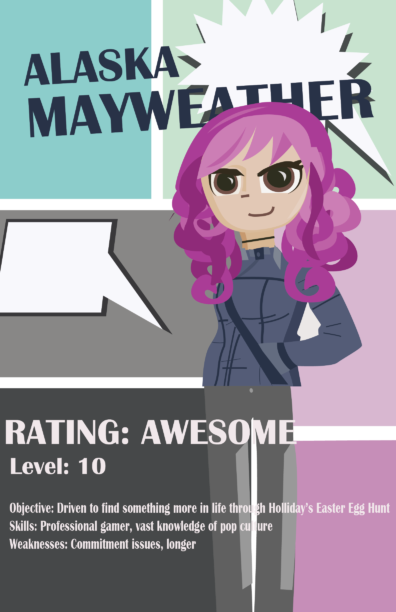
When presented with the design, two characters were shown in opposition to each other, one from the real world and the other living in the Oasis. The storyline behind the contrasting characters was a well-thought out development of their personality and how it transferred from reality to the virtual world. A lack of information was presented in textual form on the design, however, a fully-developed background was given in person. Personified qualities were presented in the body language, facial characteristics, and the outfits.  With the fantastical figure, the stance of their body exuded confidence from the hands on the hips to the open display of her form. This was in strict contrast to the real-world version that seemed to sink into herself with an air of shyness and insecurity.  The eyes of the virtual character had depth that brought them to life, exaggerating the impression of a snake-like creature that would be seen in sci-fi movies.  The non-human qualities of this figure is also emphasized by its armor-like clothing.  In contrast to the hard and protective uniform worn, the character of reality wears dull-colored and baggy clothing.  This accentuates the timid demeanor that the character has adopted.  The thin black lines, which are only present in little aspects of the Oasis figure, seem out of place in the overall design style that mostly utilizes no borders.  This is the one of the only elements that I believe could be changed or altered to better the design, besides the addition of a background and text that was was not completed at the time.

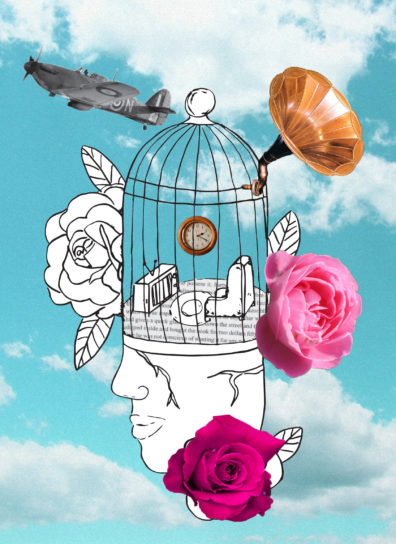
Surrealism Collage

The purpose of the time-based text is to analyze the genre conventions of a type of text and explain to the viewers how the different elements make up this genre.  For my topic, I chose to examine the elements of coming-of-age romance dramas.  Some of my favorite movies like Scott Pilgrim vs. the World and Juno all share a commonality among them, which is they share similar genre conventions. These young adult dramas infuse comedy, romance and strong themes of life with young characters in their late teens or young twenties typically.  It confronts topics that are relatable to a young audience, such as dating, school, and teenage pregnancies.  As a student in college, I’m the primary audience of these movies and can connect to the storylines on a personal level.  They have a nostalgic quality, due to being the memories of watching them with friends during high school when the themes were especially relevant to my life experiences.  The audience of my time-based text is mainly targeted towards anyone who is a fan of teenage dramas or who wants a better understanding of this genre.  I evaluated these conventions in the context of a video that utilized visual and aural modes.  With a focus on design elements, such as a spoken explanation and short scenes from the movie, I attempted to create a video that effectively described the concepts found in the genre.  The order I placed the visual elements was a central design concept I utilized.  The three key design elements in the movies can be seen in the film posters, the title sequences and the characters, which is part of the thesis I used to organize the visuals of my video by organizing the poster pictures near the beginning and videos with a focus on characters at the end.  I focused on the use of the voiceover to explain the conventions of the genre, aligning the images and video clips to my words to emphasize the specific points I made about these types of movies. The balance in the contrast between comedic and fun with the raw emotions from the story conflicts creates a movie that is both entertaining and relatable.  The purpose is to entertain through romantic and comedic plot lines that connect to the viewers on a personal level. This genre sets up an experience that is humorous and emotional through its unique and quirky stylistic choices, young characters, and storylines that reflect the ups and downs of life.  In order to show this important part of the plotline, I found a wide variety of clips to display the different aspects of the films from comedy moments and romantic ones to the emotional struggles of growing up, as seen in a clip from Perks of Being a Wallflower.  Scott Pilgrim vs. The World is an example of a movie within this genre that utilizes strong editing methods, using several types of multimodal texts throughout, such as visual or aural.  Movies like this one rely heavily on the editing of graphics from on-screen, animated or drawn title sequences, underscored with a broad musical soundtrack, seeped in alternative and indie sounds.  The movie Juno incorporates these conventions with a sketch-style animated sequence at the beginning of the movie.  It depicts drawn elements from the plotline in a quirky way that matches the tone and style of the film, using vibrant colors and fun sketches.  My goal was to emulate the visual-heavy facets by relying on the video clips and images of posters to paint a picture of the strong and graphic design elements utilized in the films.  Sounds in this genre are important from music to the noises of moving components.  I tried to utilize the music and tones from the films to emphasize these specific sounds by adding tidbits from the clips into my text, instead of having a music overlay to play as a backdrop to my voiceover.  I think the design concepts that I used were successful in portraying the conventions of this genre, however, I would have added more elements to further my points.  For example, these movies use creative transitions between scenes and utilize text through fun typefaces on the posters and on the screen.  To further stress the conventions, I would have added text to my video with similar typefaces and would have used more unique transitions to switch between the images and the clips.  In putting together this time-based text, I’ve learned more about genre conventions, how to utilize design concepts to further explain a point, and how to better use video editing software.